


- すべて
- 合金の知識
- Blog
- 工場ニュース
- Industry Knowledge
- 業界ニュース
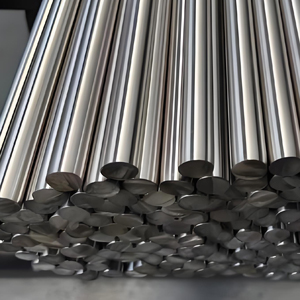
Lifecycle Cost Comparison: Incoloy 825 vs Duplex Stainless Steel 2205 for Process Industries
Selecting the optimal alloy for critical components in aggressive chemical processing, oil and gas, or marine environments is a significant engineering decision. While initial material cost is a factor, focusing solely on upfront expenditure can be misleading. A true assessment requires a *Lifecycle Cost Analysis (LCCA)*, considering every phase from purchase to decommissioning. This analysis compares their lifecycle costs based on verified properties and application suitability. Material Composition and Properties: Setting the Stage The fundamental differences in composition dictate performance and cost implications: Duplex Stainless Steel 2205: This alloy offers a dual-phase microstructure (approximately 50% austenite, 50% ferrite). Key constituents are Chromium (22%), Molybdenum (3%), Nickel (5%), and Nitrogen (0.15%). This combination provides high strength (often twice that of standard austenitic steels), good corrosion resistance, particularly to chloride stress corrosion cracking (SCC), crevice corrosion, and erosion-corrosion. It features moderate thermal conductivity and expansion. Incoloy Alloy 825: A nickel-iron-chromium alloy with additions of Copper (1.5-3.0%) and Molybdenum (3%), balanced with Titanium for stability. Its higher Nickel content (38-46%) provides inherent resistance to reducing agents (like sulfuric and phosphoric acid), excellent resistance to oxidizing environments, particularly nitric acid, and outstanding resistance to stress corrosion cracking in various environments, including chlorides and hydroxides. It possesses lower strength than Duplex 2205 but higher toughness and ductility. Lifecycle Cost Components: Initial Material Acquisition Cost: * This is typically the most visible cost. * Duplex 2205 generally has a lower initial material cost per pound compared to Incoloy 825. This is primarily due to its significantly lower nickel content (5% vs ~42%). Nickel is a major cost driver in high-performance alloys. * Cost Consideration: While Duplex 2205 is cheaper upfront, the sheer tonnage required influences the absolute cost difference. For large projects, this difference can be substantial. Manufacturing & Fabrication …
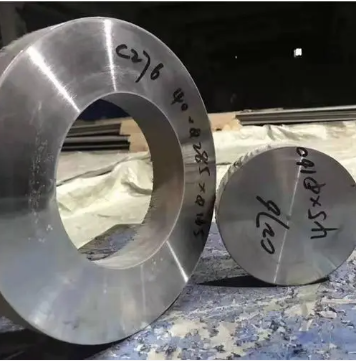
Corrosion Resistance of Hastelloy C-276 in Chemical Processing Environments: A Critical Material for Demanding Applications
The chemical processing industry continuously pushes the boundaries of technology and materials to operate efficiently under increasingly aggressive conditions. Processes involving strong acids, chlorides, oxidizing agents, and elevated temperatures pose significant challenges, demanding materials with exceptional corrosion resistance. Among the elite alloys employed, Hastelloy C-276, a nickel-chromium-molybdenum-tungsten alloy, consistently demonstrates superior performance. Its reliable resistance to a broad spectrum of corrosive environments ensures the integrity and longevity of processing equipment, minimizing downtime and maintenance costs. Understanding its capabilities is vital for engineers and designers operating in harsh chemical sectors. Introduction: The Importance of Material Selection in High-Aggression Environments Corrosion represents a persistent threat to equipment reliability and operational safety within chemical plants, pharmaceutical manufacturing facilities, and petrochemical refineries. Failure due to corrosion can lead to disastrous consequences, including leaks, unplanned shutdowns, environmental contamination, costly repairs, and significant financial losses. Consequently, selecting the optimal material for specific process streams is a paramount engineering decision. Nickel-based superalloys like the Hastelloy family offer inherent advantages that stainless steels cannot match when faced with severe corrosive conditions. Hastelloy C-276 stands out for its versatility and robustness. Hastelloy C-276: Composition and Properties Developed by Haynes International, Hastelloy C-276 (UNS N10276) belongs to the Hastelloy family of nickel-based alloys, specifically designed for outstanding corrosion resistance in challenging media. Its typical composition includes: * Nickel (Ni): Base (~50-58%). Provides inherent resistance to reducing acids and alkaline solutions, forming solid solutions with other elements. * Chromium (Cr): ~14.5-16.5%. Enhances resistance to oxidizing environments and improves general corrosion resistance. * Molybdenum (Mo): ~15-17%. Primarily responsible for exceptional resistance to reducing acids and pitting/crevice corrosion. Forms stable protective layers. * Tungsten (W): ~3-4.5%. Acts synergistically with molybdenum, further boosting localized attack resistance. * Iron (Fe): ~4-7%. Minor content; balances cost and metallurgical properties. * Low …
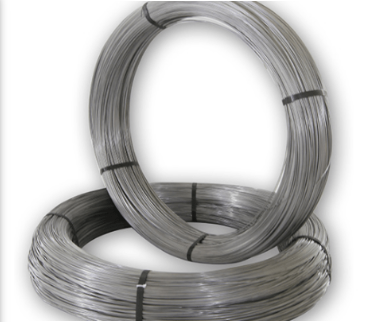
Sigma Phase Formation in Incoloy 925: Prevention Through Heat Treatment Optimization
Incoloy 925, a nickel-iron-chromium alloy modified with molybdenum, copper, and titanium, occupies a vital niche within the family of high-performance Incoloy alloys. Its robust combination of exceptional corrosion resistance (particularly against sour gases like H2S and chlorides), high strength, and resistance to stress-corrosion cracking makes it indispensable for demanding applications in the oil and gas industry, chemical processing plants, marine environments, and power generation. This alloy performs reliably under severe conditions involving elevated temperatures and pressures, solvent extraction, and sour service environments. However, like many superalloys containing significant amounts of chromium and molybdenum, Incoloy 925 faces a critical metallurgical challenge: the potential formation of detrimental sigma (σ) phase during service or improper thermal processing. This article focuses on understanding sigma phase formation in Incoloy 925 and, crucially, how heat treatment optimization serves as the primary tool for its prevention. Understanding the Sigma Phase Problem Sigma phase is a hard, brittle intermetallic compound typically rich in chromium and molybdenum. Its crystal structure (tetragonal) and inherent brittleness starkly contrast with the ductile austenitic matrix of Incoloy 925. * Origin: Sigma phase primarily precipitates during long-term exposure within a specific critical temperature range, typically between approximately 590°C (1100°F) and 870°C (1600°F). Below and above this range, the phase is generally either thermodynamically unstable or dissolves very slowly. Its formation is diffusion-controlled, meaning it nucleates and grows at grain boundaries and other microstructural defects over time, particularly during slow cooling through the critical range or prolonged service exposure within it. * Impact: The presence of sigma phase is detrimental because: * Loss of Ductility and Toughness: The brittle sigma particles act as points for crack initiation and propagation, dramatically reducing the alloy’s impact resistance, fracture toughness, and overall ductility. This embrittlement compromises component integrity, making it susceptible to catastrophic …